
How Robotics Helps Small and Mid-Sized Manufacturers
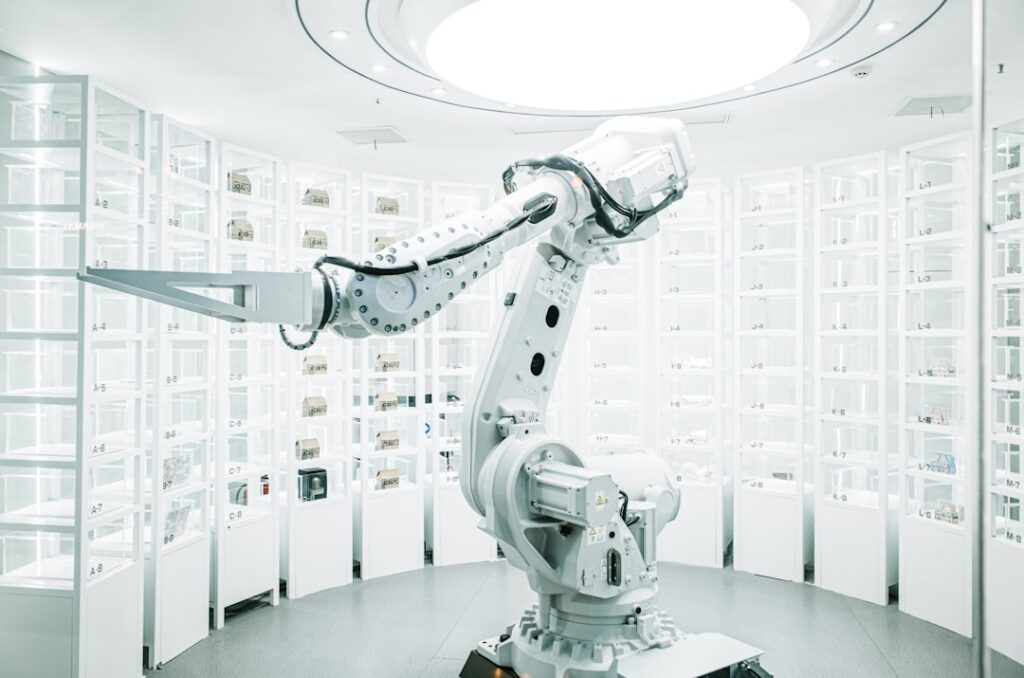
Robotics is no longer limited to large automotive plants. Smaller manufacturers can now use compact robots, machine vision and connected controllers to improve repeatability without rebuilding an entire production line. The best results come from solving one clearly measured problem at a time.
Start with the process, not the robot
Before selecting hardware, document the current task: cycle time, payload, reach, accuracy, operator involvement, safety risks and acceptable downtime. A robot is useful only when it improves the complete process around it. Fixtures, feeding, inspection and data collection are often as important as the robot arm.
Five areas where robotics creates practical value
1. Repetitive material handling
Pick-and-place, machine tending and packaging are strong first projects because the motion is repeatable and success can be measured through throughput, rejection rate and operator time saved.
2. Vision-assisted inspection
A camera, controlled lighting and a trained inspection model can detect missing parts, incorrect orientation or visible defects. Keep the first inspection problem narrow and collect representative images before choosing the final camera or AI model.
3. Safer workstations
Robots can take over hot, sharp, dusty or ergonomically difficult movements. A complete risk assessment is still required. Safety scanners, guarding, emergency stops and validated stopping distances must be designed as part of the cell.
4. Flexible low-volume production
Collaborative robots and reconfigurable fixtures can help factories that manufacture several product variants. Standard programs, labelled changeover steps and stored recipes reduce the time required to move from one job to another.
5. Better production data
Controllers, sensors and industrial software can record cycle time, faults, energy use and quality results. This data helps maintenance teams find recurring losses and gives managers evidence for the next automation decision.
A sensible implementation path
- Choose one repetitive or quality-critical task.
- Record the present cycle time, cost and failure rate.
- Build a small proof of concept with real parts.
- Complete safety and maintainability reviews.
- Train operators and maintenance staff before launch.
- Compare the new results with the original baseline.
Common mistakes to avoid
Do not automate an unstable process, underestimate end-of-arm tooling, ignore component lead times or depend on a single person to maintain the system. Plan spare parts, documentation, backups and manual recovery procedures from the beginning.
Frequently asked questions
Does a small manufacturer need a large industrial robot?
No. The correct choice depends on payload, reach, speed, environment and safety requirements. A compact industrial or collaborative robot may be sufficient for many applications.
What should be measured after installation?
Track throughput, downtime, quality, changeover time, maintenance effort and safety incidents. These measurements show whether the complete system is delivering value.